Use case — e-commerce and trade
Your webshop is selling, but your stock does not know it yet.
Orders come in via the webshop, stock is kept in a spreadsheet and the accounts run days behind. This page covers two situations that look alike but are not the same: webshop and retail on one side, wholesale and distribution on the other. Choose your side below.

Choose your situation
Webshop and retail, or wholesale and distribution?
Odoo e-commerce for webshop and store
You sell online, perhaps in a shop as well, and sometimes via marketplaces. The pain is almost never in the webshop itself, but in the fault line after it: the order has to go to the warehouse, the stock has to go back to the channel and the invoice has to go to the accounts. As long as people are that link, the manual work grows with your turnover.
We set up Odoo e-commerce solutions in the Netherlands so that an order is recorded once: stock reservation, warehouse order, shipping label, invoice and journal entry follow automatically. If your shop runs on Odoo eCommerce, everything is already in the same system. If it runs on Shopify, WooCommerce or Magento, we connect it.
By managing your Odoo e-commerce we also mean the maintenance afterwards: switching on new channels, adjusting pricing rules and monitoring integrations. Our Odoo e-commerce services therefore do not stop at go-live.
Where you will see this
- The stock the webshop shows is the stock on the shelf
- Returns come back as stock and as a correction in a single flow
- Point of sale and webshop share the same customer and product data
- Payments are reconciled automatically in the accounts
Integrations that usually go with this
Do you sell mainly to consumers in both shop and webshop? Then the industry page retail and e-commerce your next step.

Webshops, brands with their own D2C channel and retailers that want to run online and offline on one stock.
Odoo as an ERP for trading, wholesale and distribution companies
In wholesale and distribution the emphasis lies elsewhere. You sell to business customers with their own price agreements, volume tiers and payment terms. Your warehouse works with lots, batches and sometimes serial numbers. And your biggest customers impose their own way of ordering on you, from a portal to EDI messages.
As Odoo ERP for distribution companies, it is therefore not about the shop window but about the chain: purchasing, receipt, storage, order picking, shipping and invoicing in one line. Customer-specific price lists, minimum order quantities and lead times per supplier are part of that, as is a purchase proposal based on actual sales rather than gut feeling.
If you work with an external warehouse or a WMS, we connect it. We describe the same approach in more detail in the use case integrations with SAP, Shopify, WMS and EDI. If you are coming from a landscape of separate packages, also read from Excel and standalone packages to one ERP.
Where you will see this
- Customer-specific price lists and volume tiers without separate Excel files
- Lot and serial numbers traceable from receipt to delivery
- Purchase proposals based on actual sales and lead time
- Backorders and partial deliveries your customer can track themselves
- No more separate records kept alongside the system
Integrations that usually go with this
Is your centre of gravity in the warehouse and the supply chain? Then continue to logistics and wholesale or to transport and distribution.

Wholesalers, importers and distribution companies that supply business customers and want their warehouse and administration in one system.
Integrations
What Odoo talks to
These are the systems we connect most often in trading and e-commerce environments. If something is not listed here, that does not mean it cannot be done — it means we want to look at it first.

| Integration | Category | What for |
|---|---|---|
| Shopify | Webshop | Orders, customers and stock between shop and Odoo |
| WooCommerce | Webshop | Keeping orders and products in sync with WordPress |
| Magento | Webshop | Larger catalogues and multiple store views |
| Channable | Marketplace | Feeds and orders to comparison sites and marketplaces |
| Amazon | Marketplace | Bringing in orders and reporting stock back |
| bol | Marketplace | Orders, returns and delivery times in one flow |
| Picqer | Warehouse | Picking, packing and stock movements back to Odoo |
| Sendcloud | Shipping | Labels, track and trace and carrier selection |
| PostNL | Carrier | Shipments and statuses for parcel delivery |
| DHL | Carrier | Domestic and international shipments |
| DPD | Carrier | Parcels with their own label and scanning process |
| Mollie | Payments | Payment methods and automatic reconciliation |
| Power BI | Reporting | Reporting on Odoo data outside Odoo |
The real reason to buy
Margin per order and stock that is correct
Trade is a margin business. As long as purchase price, shipping costs, discounts and returns sit in different systems, the margin per order is an estimate made after the fact. That is exactly why a trading company is not looking for “a webshop integration”, but for peace of mind in the numbers.
If you put sales, purchasing, stock and accounting in one Odoo environment, cost price and selling price live on the same line. The margin per order is then not a report someone produces, but a field that is already there. The same goes for stock: every receipt, picking and return updates the same stock your channels display.
Margin in the moment
Cost price, discount and shipping costs sit on the order line, so you see immediately what is left on the bottom line.
One single source of truth for stock
Webshop, marketplace, point of sale and warehouse all look at the same stock, including reservations and backorders.

Reporting on the same source data
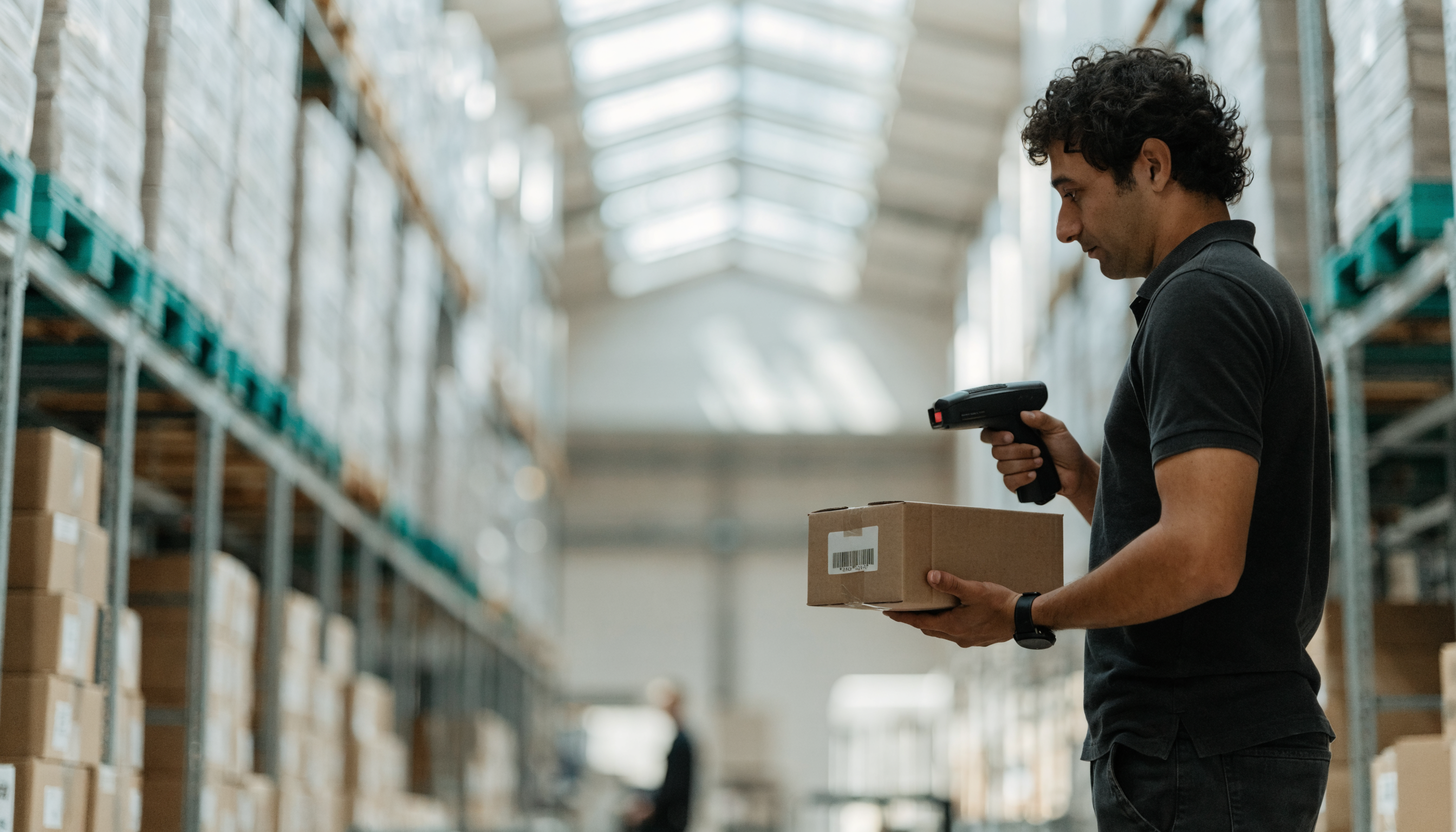
Every scan updates the stock your channels display

Invoicing runs alongside the order, not behind it

From real projects
Tenways: e-commerce across multiple countries
Tenways is a European e-bike brand selling to consumers in several countries. Webshop, stock and administration were separate systems; today it all runs on one Odoo platform.
Exactly the combination of both tabs above: a consumer-facing sales channel at the front, and a cross-border distribution challenge at the back.
Read the Tenways customer caseFrequently asked questions
Questions about Odoo for e-commerce and trade
Different situation? View the overview of all use cases or read how a Odoo implementation works with us.
Is your webshop running ahead of your systems?
Start with the Business Scan and see where the fault lines between sales, stock and administration are. Prefer to talk through your situation first? Feel free to call or email us.
Start the Business ScanGet in touch